

The Book & Toolkit Collection
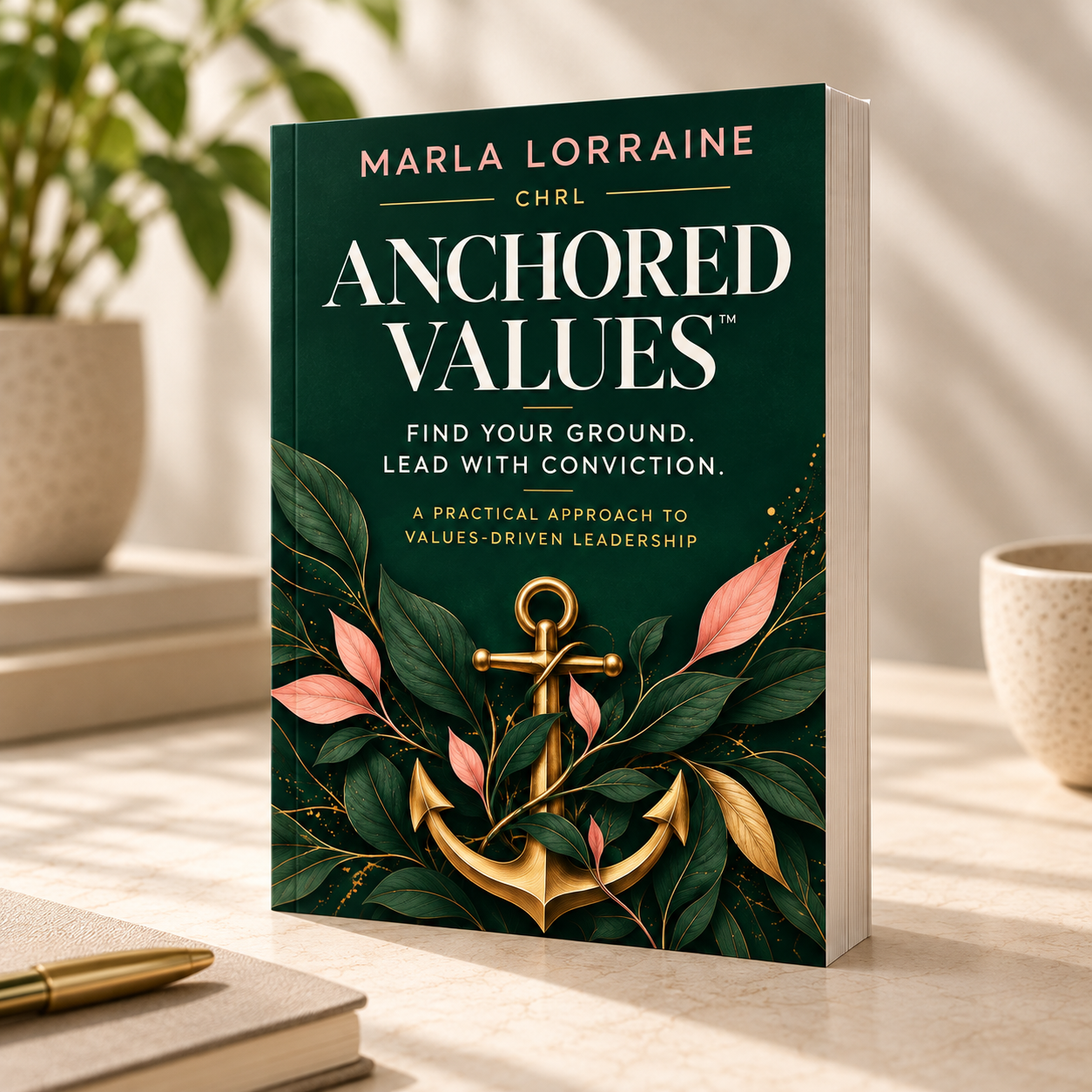
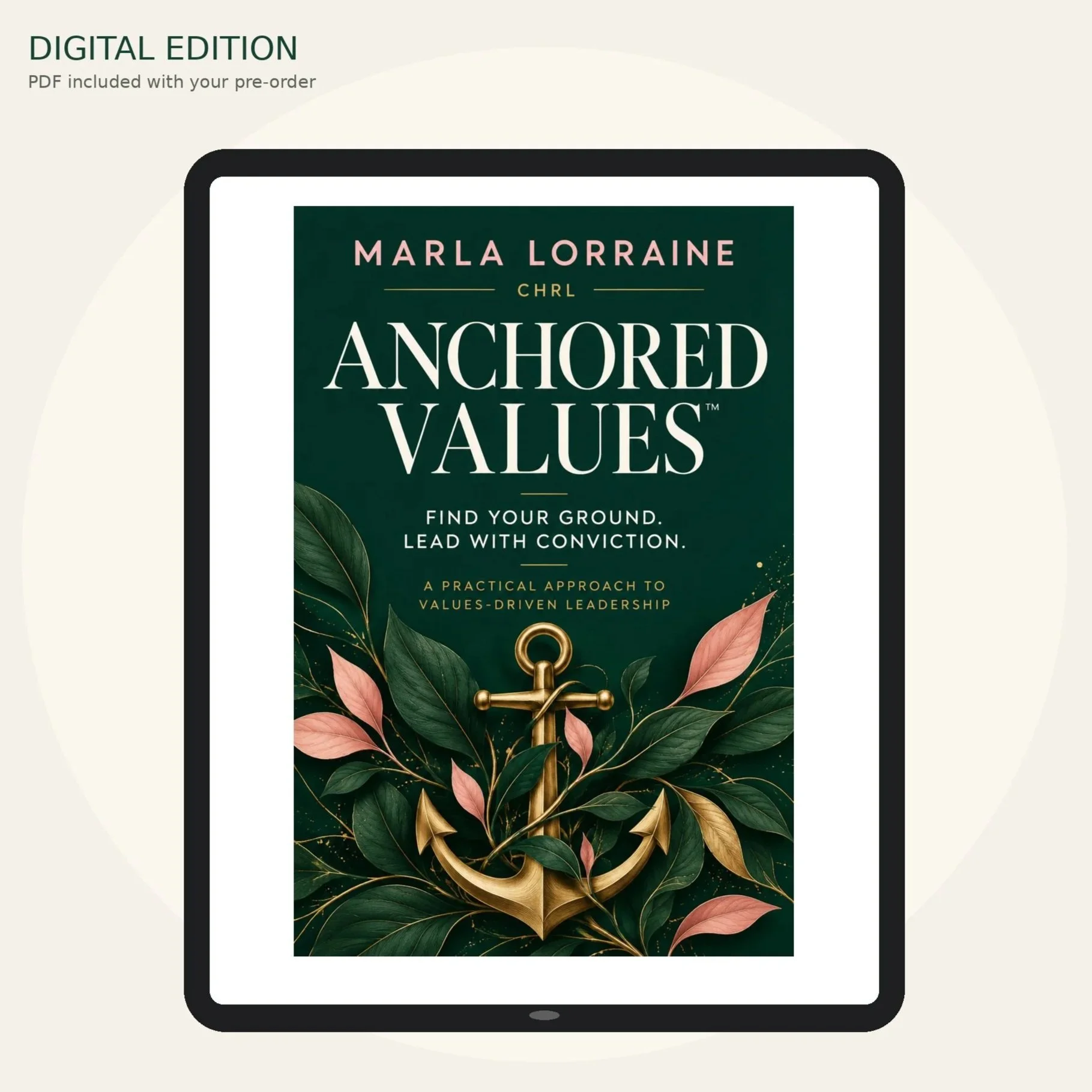
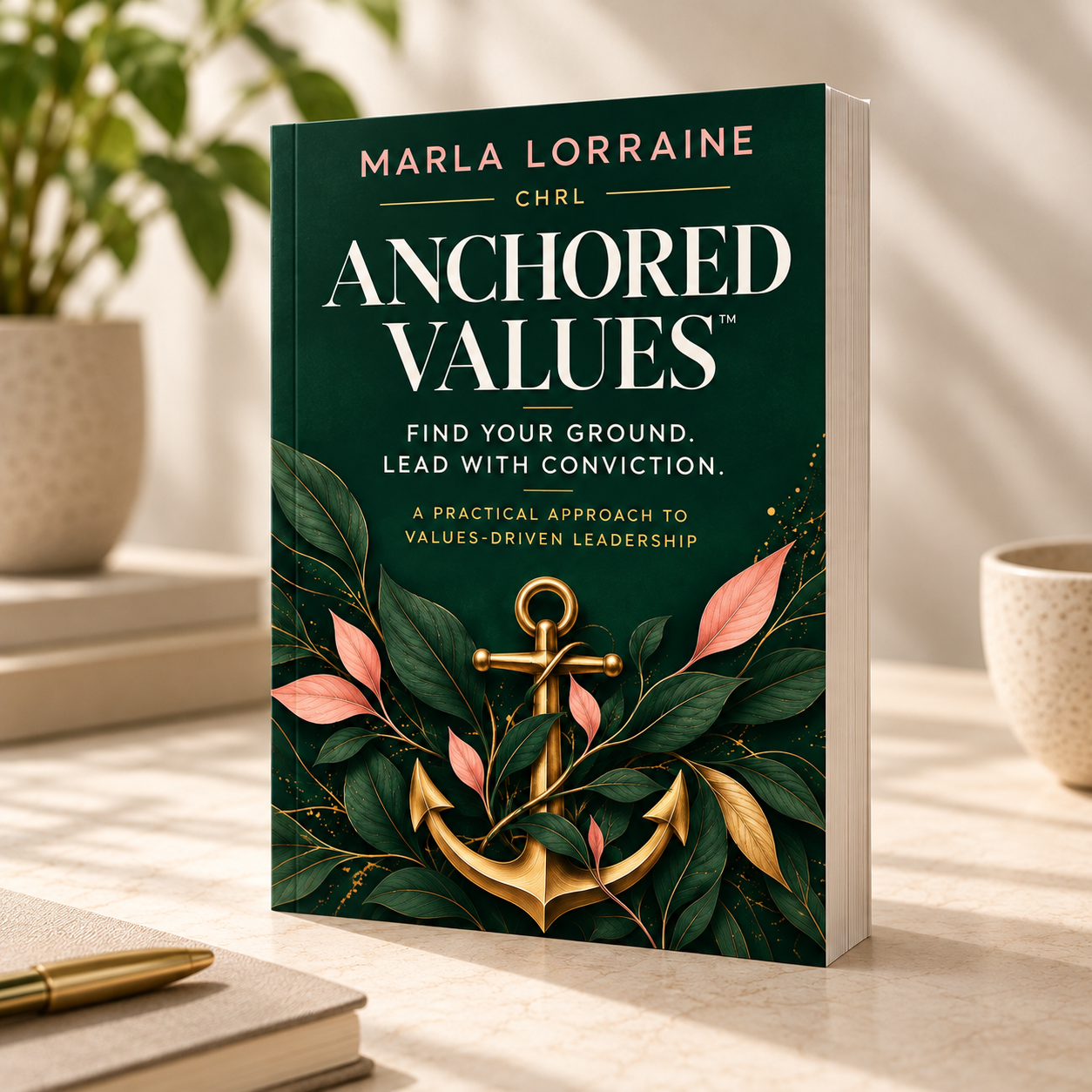
Anchored Values™
Find Your Ground. Lead With Conviction.
A practical approach to values-driven leadership.
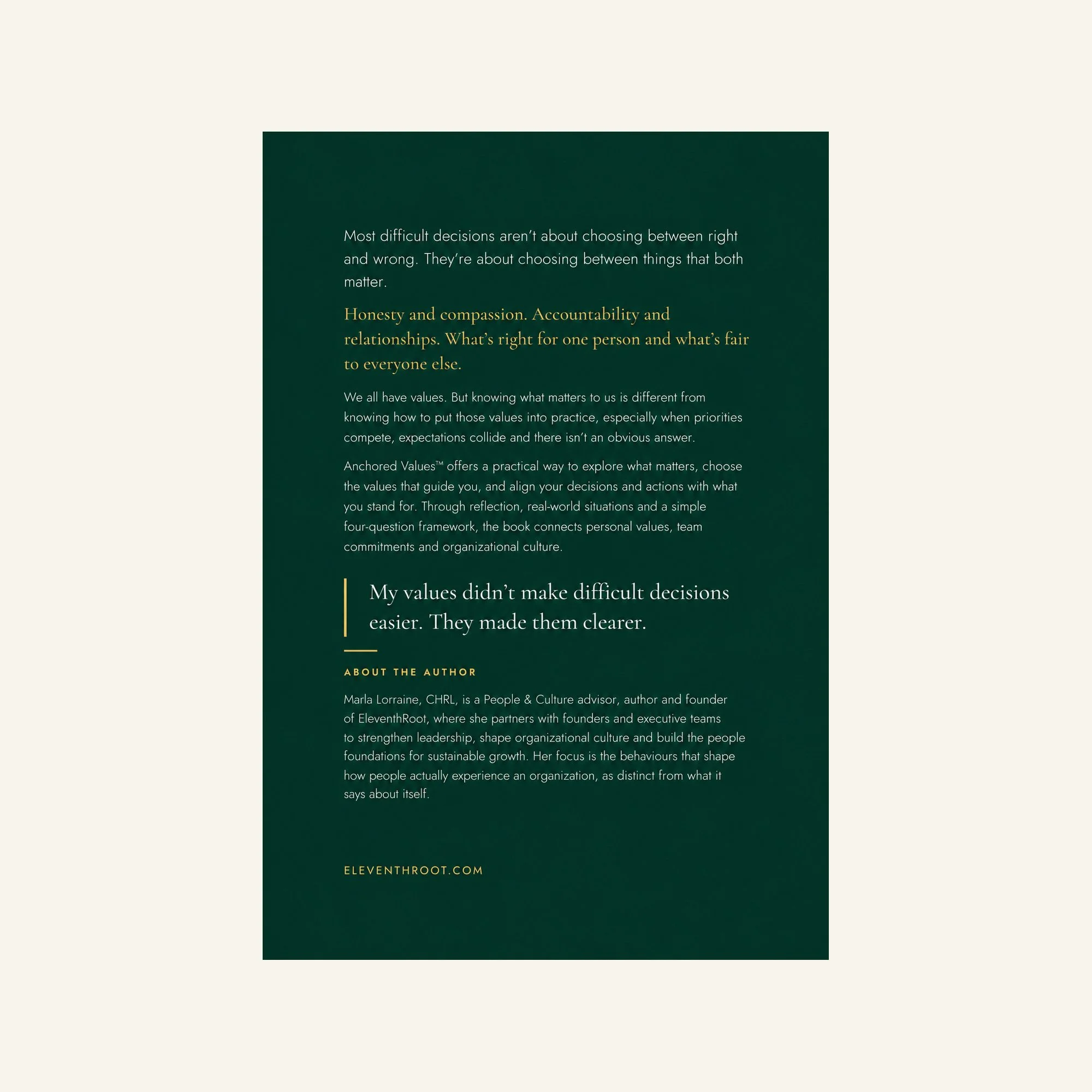
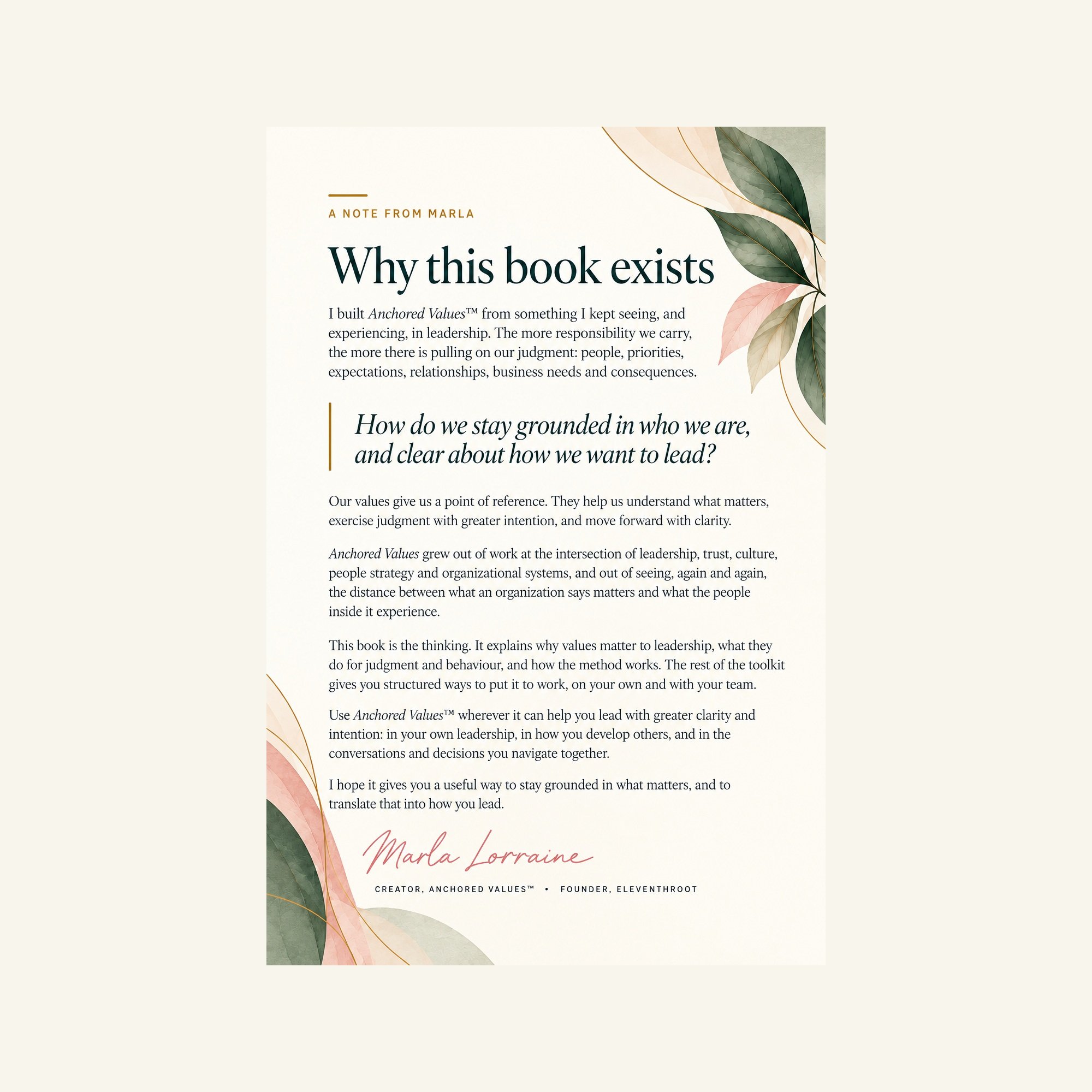
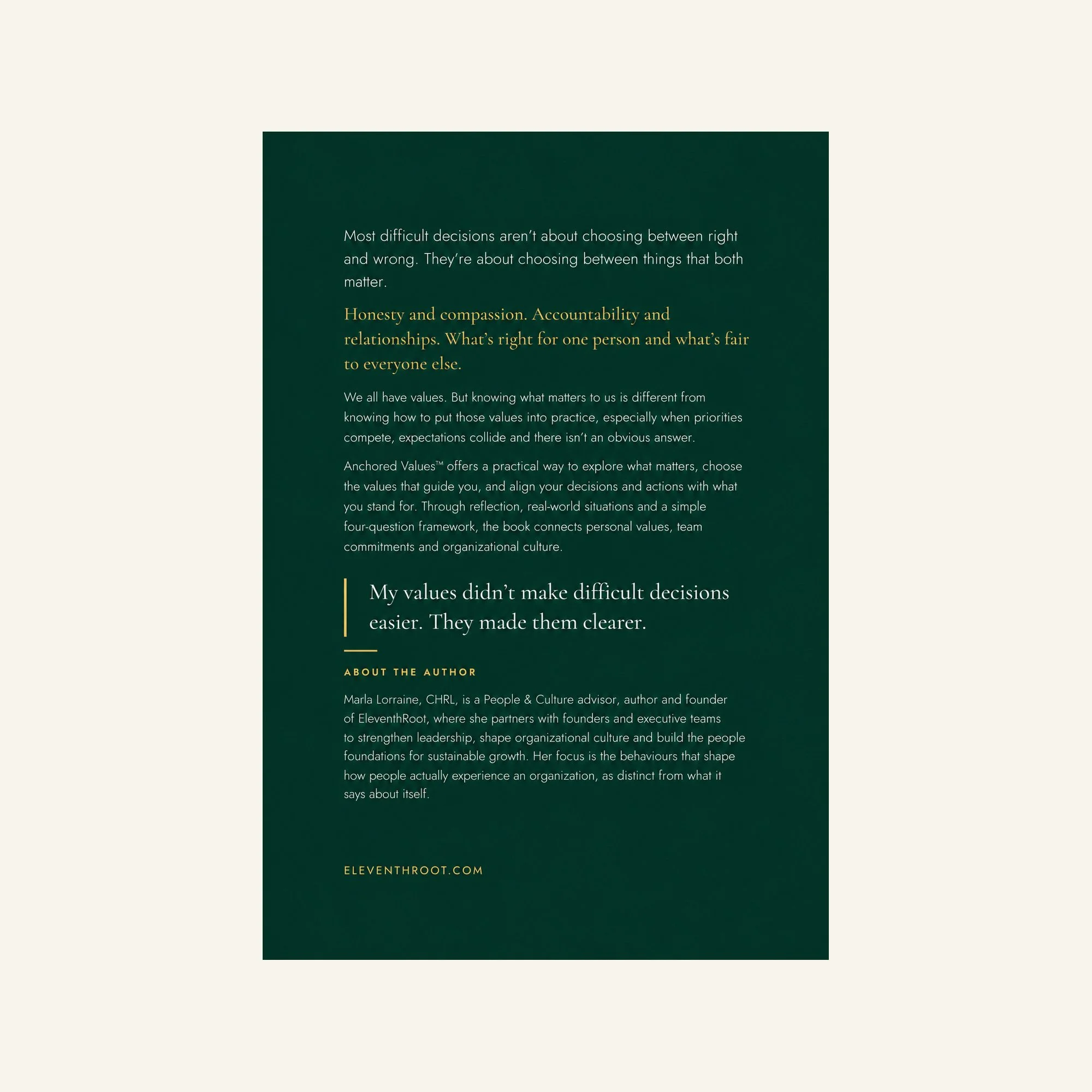
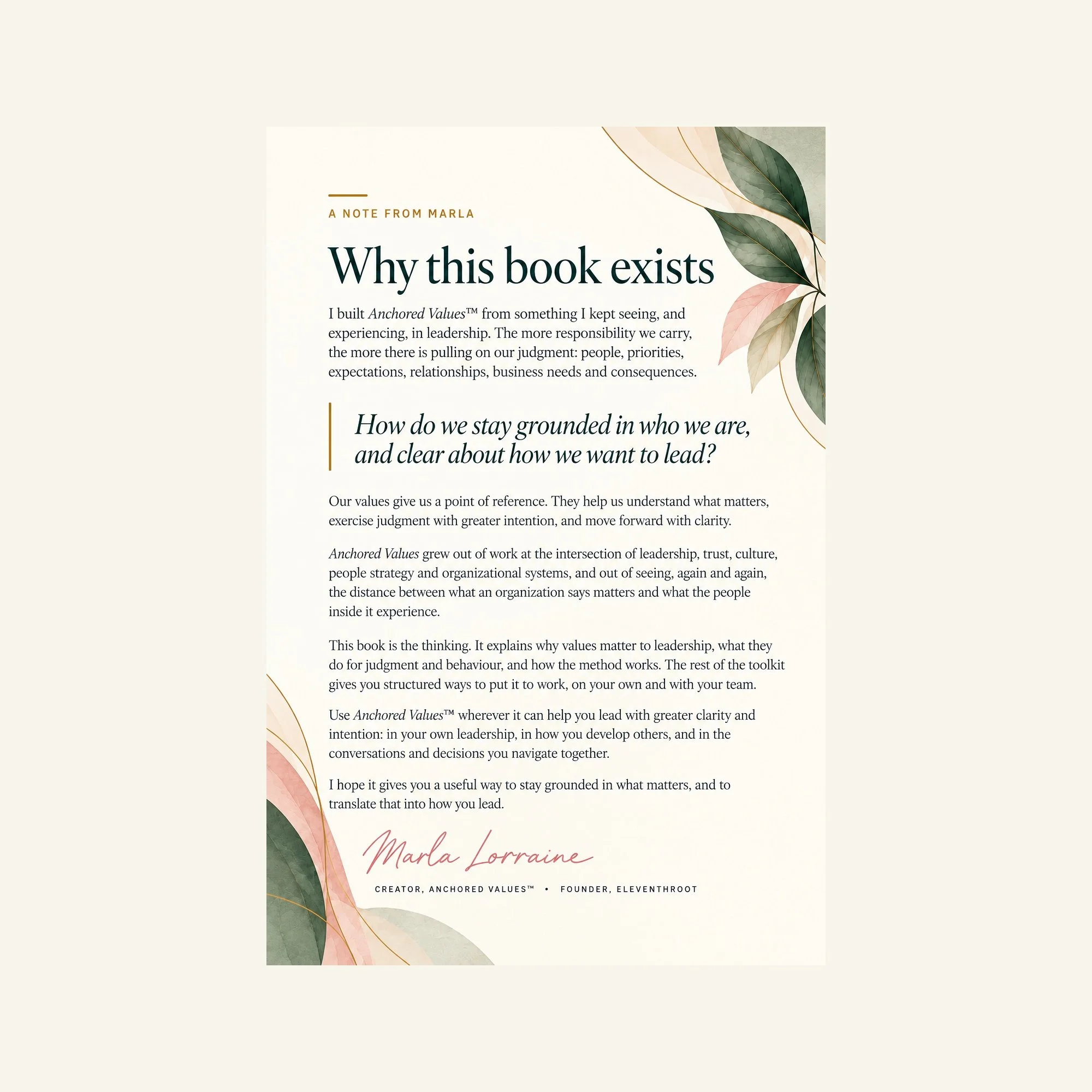
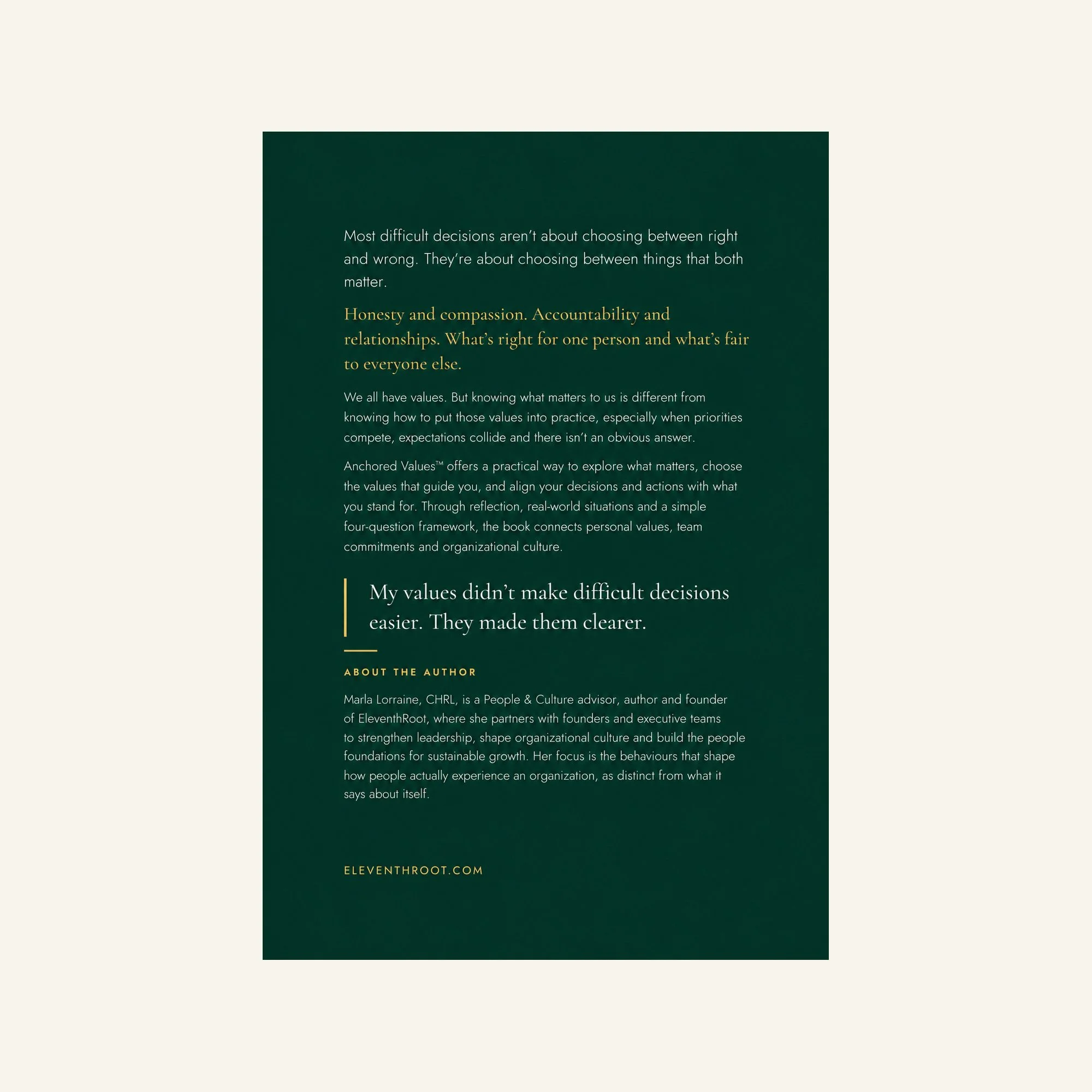
Anchored Values™ is an original leadership methodology created by Marla Lorraine, CHRL, founder of EleventhRoot Consulting Inc. It helps individuals, teams and organizations connect what they stand for with how they make decisions, lead people and shape the culture around them.
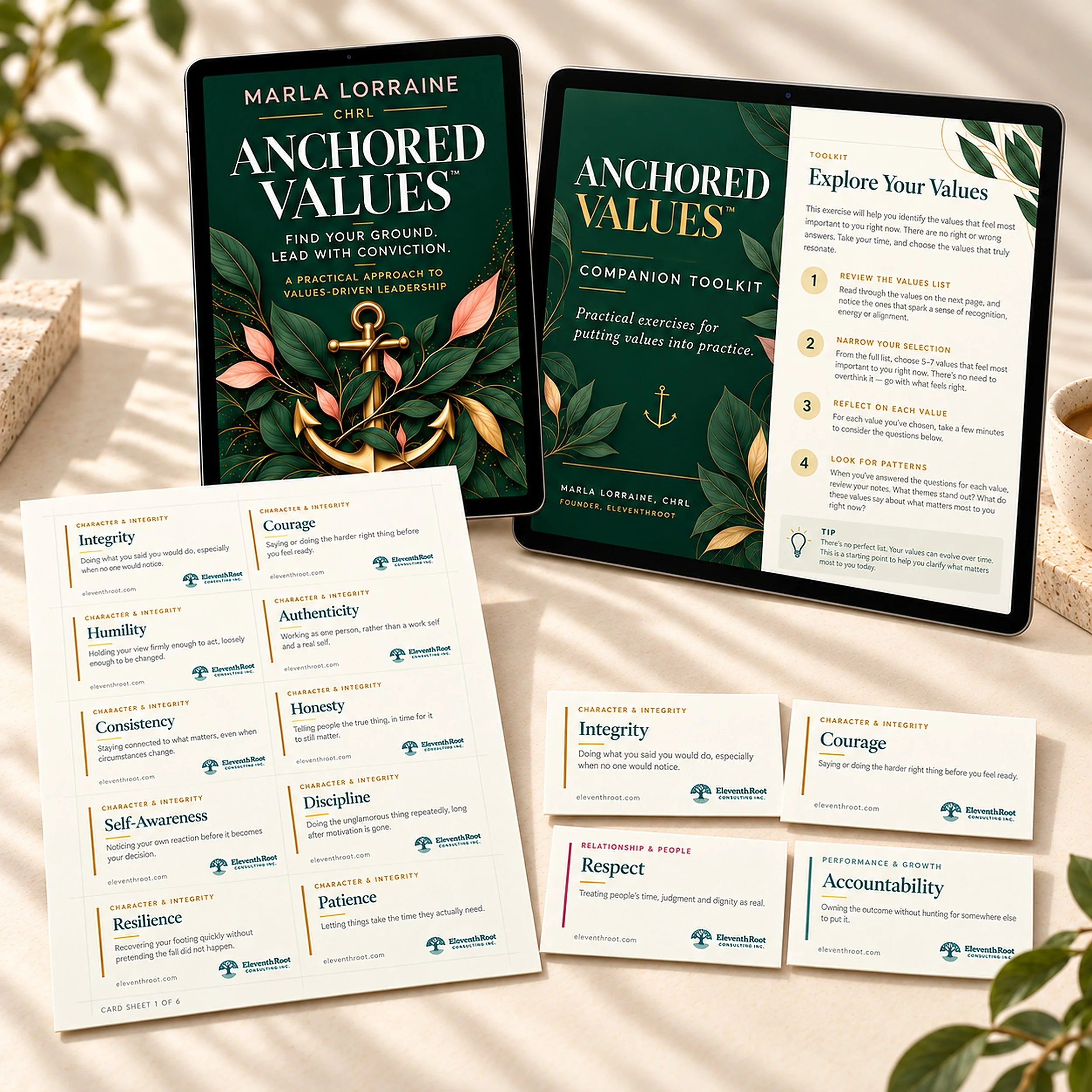
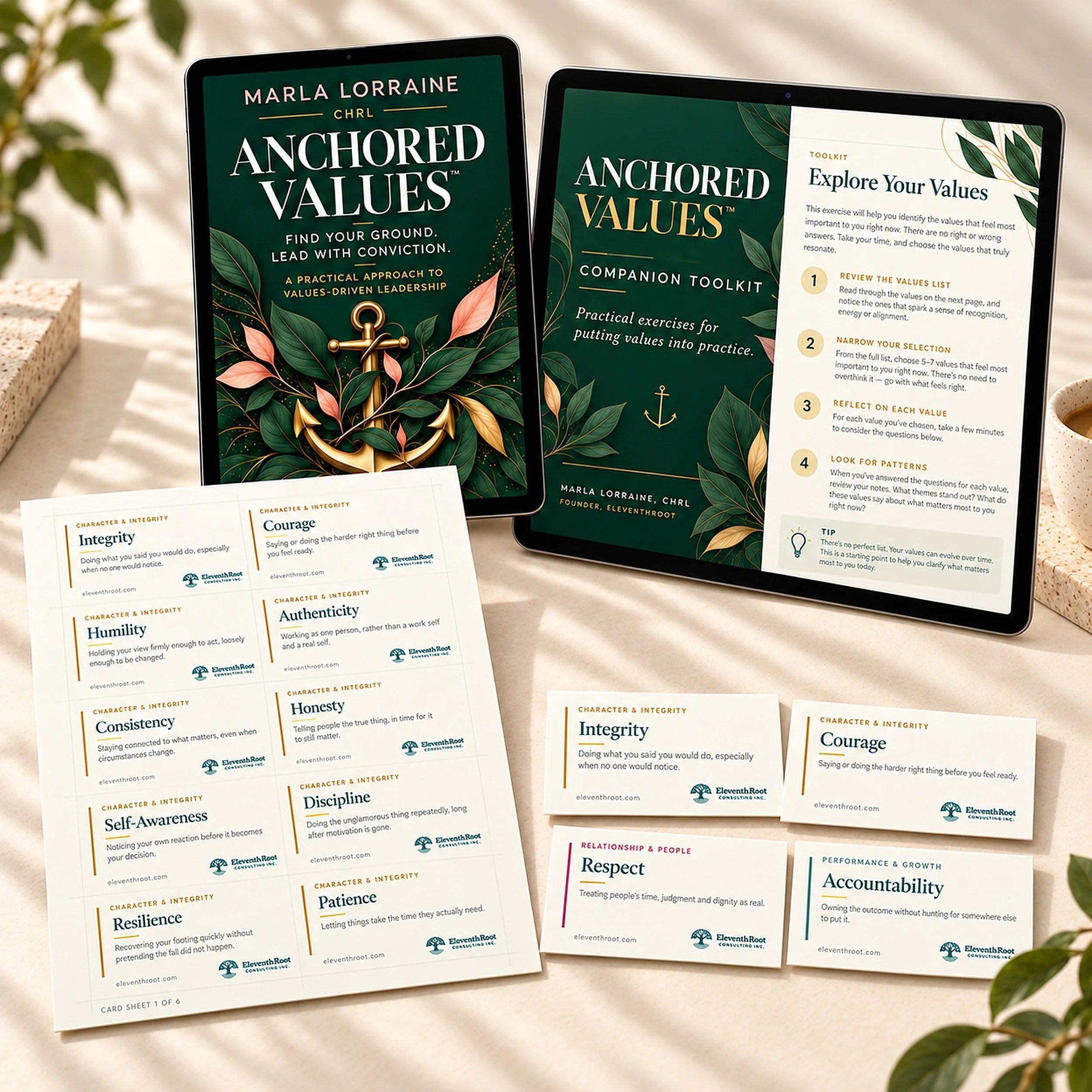
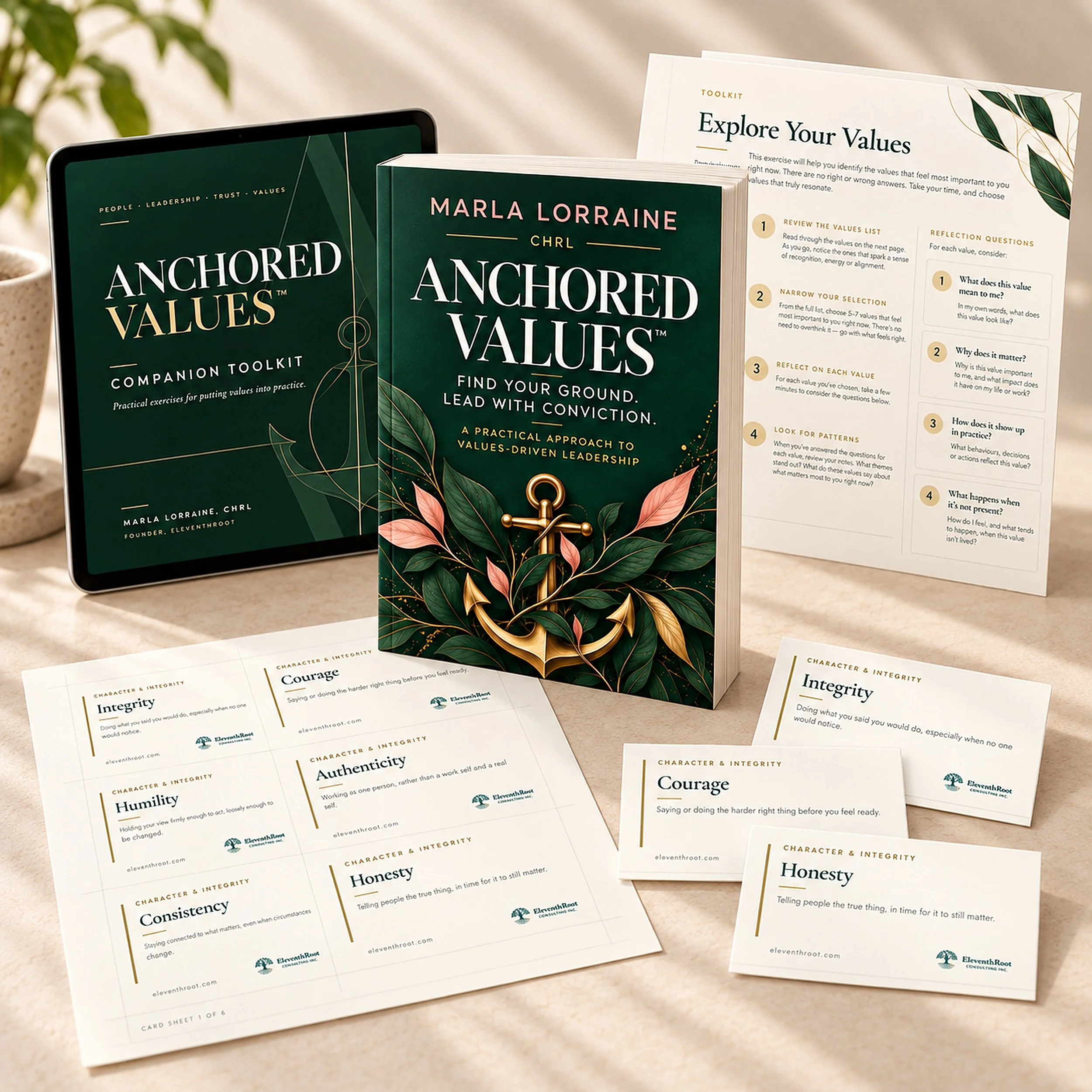
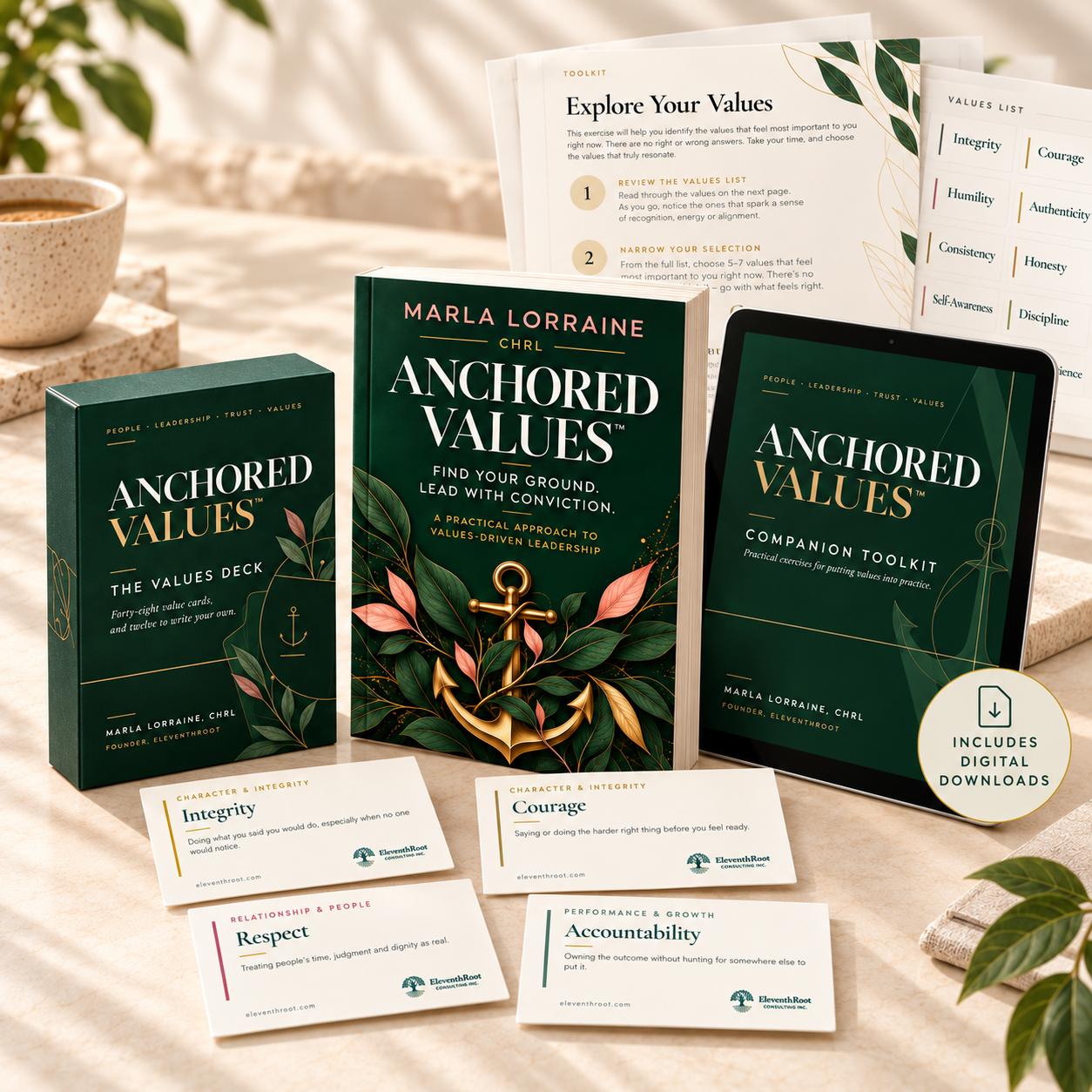
Written for founders, executives, managers and anyone responsible for decisions that affect others. A substantive book, supported by a Companion Toolkit and Values Deck.

The Anchored Values™ Methodology
Four questions for decisions where more than one thing matters.
At the centre of the book is a practical method built around four questions. It helps you understand what matters in a particular situation, recognize competing priorities and decide which value needs to lead.
01StakesWhat are we trying to protect?
Name what matters in the situation. There may be more than one thing at stake.
02TensionWhat is pulling the other way?
Another legitimate priority, a different perspective, a constraint, incomplete information or a competing responsibility.
03AnchorWhich value needs to lead?
The value that provides the strongest guidance here. Not a permanent ranking, and not a signal that everything else stops mattering.
04ActionWhat does that require us to do?
Deciding, having a conversation, gathering information, setting a boundary, repairing something or deliberately waiting.
The goal isn’t to eliminate uncertainty or guarantee the right answer. It’s to make your reasoning visible, so you can choose deliberately and explain the choice to the people it affects.
Three Levels of Values
Personal
What do I stand for?
Team
How do we want to work and lead together?
Organizational
What do we stand for as an organization?
Each level serves a different purpose. They work together, and they don’t need to contain identical values.
Three Situations Leaders Recognize
When Leadership Gets Complicated
Knowing what matters is one thing. Understanding what it requires of you when leadership gets complicated is another.
01 The Leader Nobody Will ChallengeTheir results are exceptional. Their behaviour is damaging the team. And they’ve helped build your career.
A senior leader consistently delivers results the business depends on. The way they treat people is wearing down the team around them, and some of the people affected have started to go quiet. Others see it too. No one has raised it. You have a strong working relationship with this leader, and they have supported your career.
- The results are visible and easy to measure. The impact on people is harder to quantify.
- Raising it could cost you influence, the relationship or future opportunities.
- Saying nothing is also a decision, and the team will read it as one.
- The people who have stopped speaking up
- The standards the organization says it holds
- Results that depend on one person no one feels able to challenge
- Your own credibility, whichever way you go
- Accountability
- Loyalty
- Courage
- Respect
- Excellence
- Psychological Safety
Which one needs to lead depends on you, your role and your organization.
What are your values worth when acting on them could cost you something you’ve worked hard to build?
Where Anchored Values™ helps: the four questions separate what you’re trying to protect from what is pulling you the other way, so the cost of each path is visible before you decide what to do next.
02 The Employee Everyone Is CarryingThey’ve given years to the organization. Now the team is absorbing work they can no longer deliver.
A long-serving employee is respected, committed and has contributed a great deal over the years. Over time, the gap between what the role requires and what they are able to deliver has grown. You’ve offered support, feedback and resources. The gap remains, and colleagues are quietly picking up the difference.
- Care for the individual and fairness to the team are both legitimate, and both matter.
- You may not know everything affecting their performance. Health, personal circumstances or accommodation needs may be part of the picture.
- Putting off a hard conversation can feel like kindness while the cost moves onto other people.
- The employee’s dignity and wellbeing
- The colleagues absorbing the work
- Customers and results
- What your expectations mean to everyone else
- Compassion
- Fairness
- Loyalty
- Accountability
- Honesty
- Dignity
Which one needs to lead depends on you, your role and your organization.
How would you know whether you’re acting with compassion, or avoiding a conversation you need to have?
Where Anchored Values™ helps: naming the tension, including what you don’t yet know, helps you choose a next step you can explain to the employee and to the team. Sometimes that step is a clearer conversation, a different kind of support or more information.
03 The Question You Can’t Fully AnswerA restructuring is being considered. Nothing is final. An employee asks whether their job is safe.
Leadership is evaluating options that could affect roles, including on your team. Nothing has been decided, and you’ve been asked to keep the process confidential. People can see that something is happening. A team member closes the door and asks you directly.
- The tension comes from a constraint as much as from competing values. You may not be permitted to share what you know.
- Silence rarely reads as calm. It often reads as something being withheld.
- What you say now will be remembered when decisions are announced.
- The employee’s ability to make decisions about their own life
- The integrity of a confidential process
- Your credibility with your team
- Trust in leadership through whatever comes next
- Honesty
- Integrity
- Transparency
- Trust
- Stability
- Respect
Which one needs to lead depends on you, your role and your organization.
How do you stay honest when you can’t share everything you know?
Where Anchored Values™ helps: the method doesn’t ask you to put transparency above confidentiality. It helps you work out what you can say truthfully within the boundary you’re required to hold.
These situations are illustrative, not accounts of actual clients. Where a situation involves legal obligations, accommodation, harassment, investigations or another formal process, those requirements apply and appropriate advice should be sought.
Inside the Book
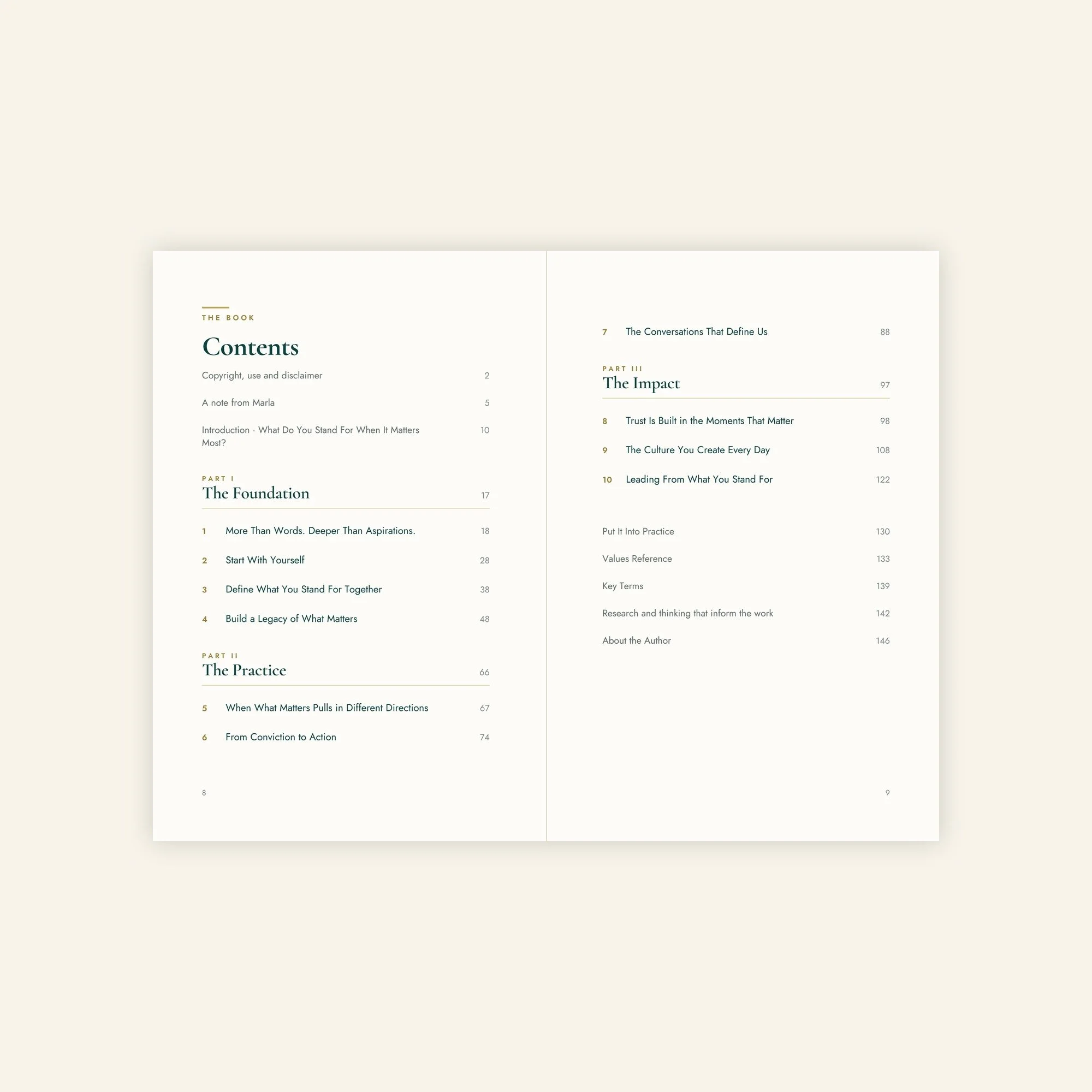
Ten chapters. Three parts. One coherent method.
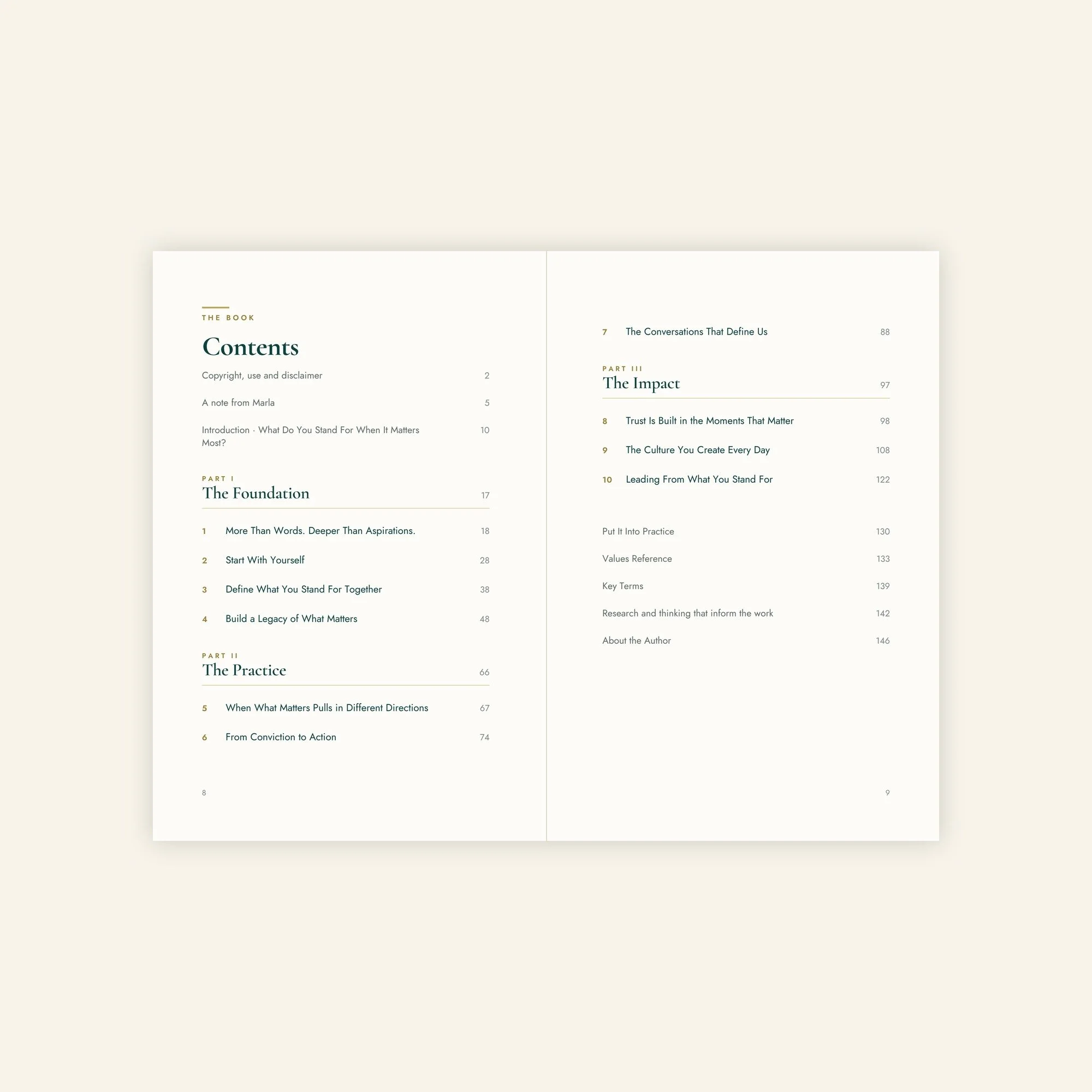
The book moves from understanding your values, to using them when priorities compete, to recognizing what your leadership creates over time. Practical applications run throughout.
Part I
The Foundation
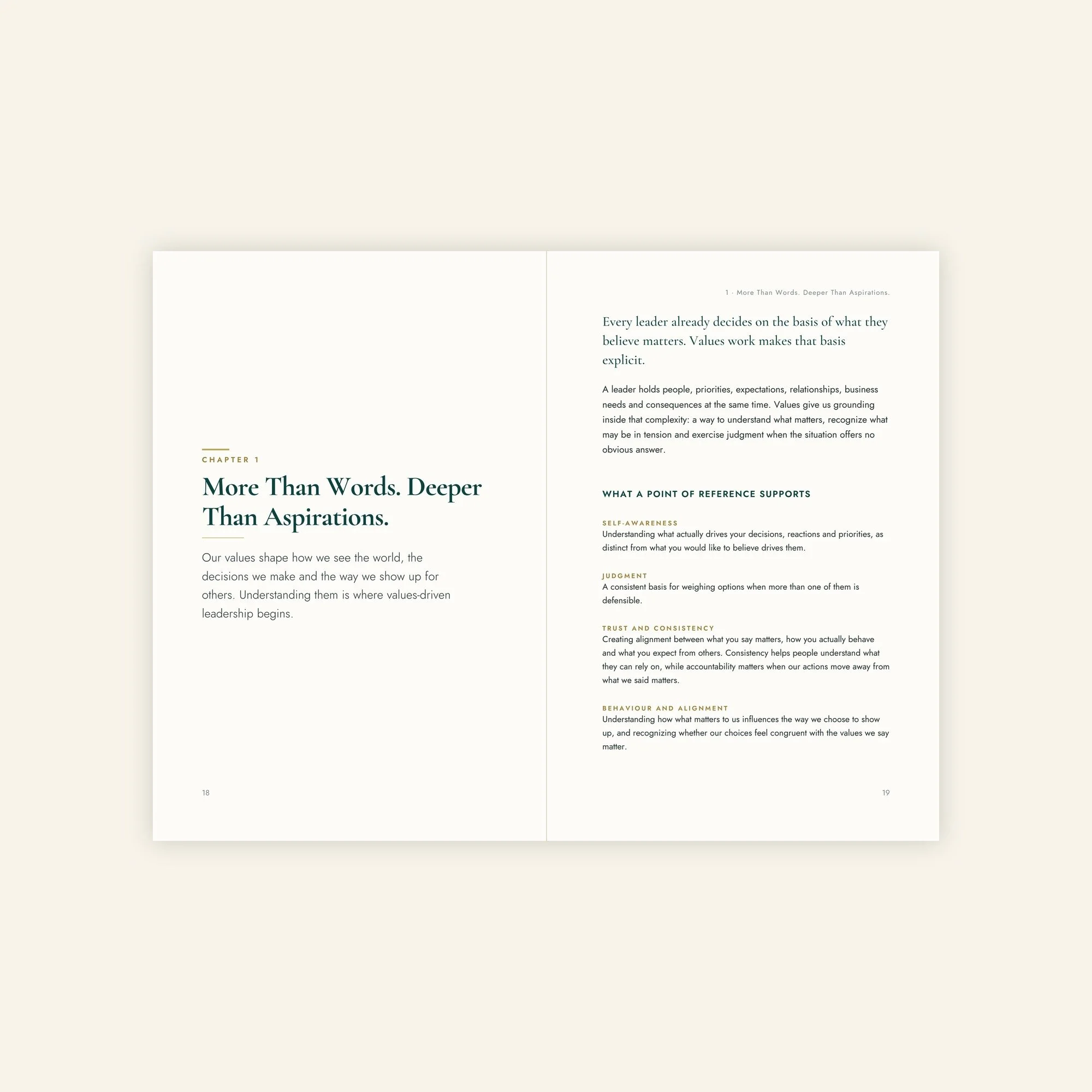
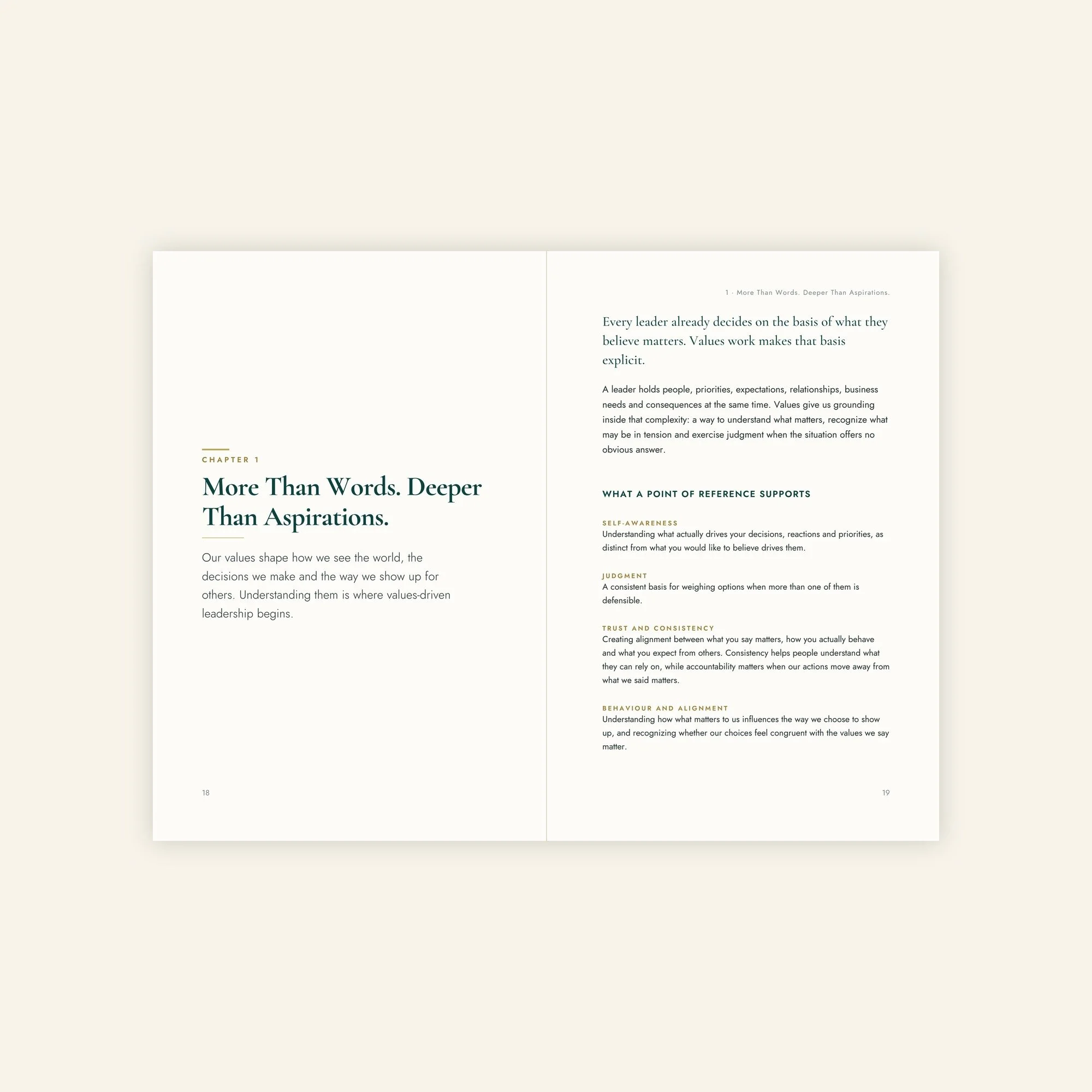
The Things That Guide Us
What values are, how they operate in leadership, and the different roles of personal, team and organizational values. Identify your three Value Anchors, define shared team values and build organizational commitments.
- 1More Than Words. Deeper Than Aspirations.
- 2Start With Yourself
- 3Define What You Stand For Together
- 4Build a Legacy of What Matters
Part II
The Practice
When What Matters Gets Complicated
Moving from understanding values to using them in judgment, decisions, action and difficult conversations, including working a decision through Stakes, Tension, Anchor and Action.
- 5When What Matters Pulls in Different Directions
- 6From Conviction to Action
- 7The Conversations That Define Us
Part III
The Impact
What We Create Through Leadership
How repeated decisions and behaviour become trust, shape team and organizational culture, and influence the leaders you develop around you.
- 8Trust Is Built in the Moments That Matter
- 9The Culture You Create Every Day
- 10Leading From What You Stand For
Also inside: Put It Into Practice · Values Reference · Key Terms · Research and thinking that inform the work
Beyond the Book
Built to be used, on your own and with your team.
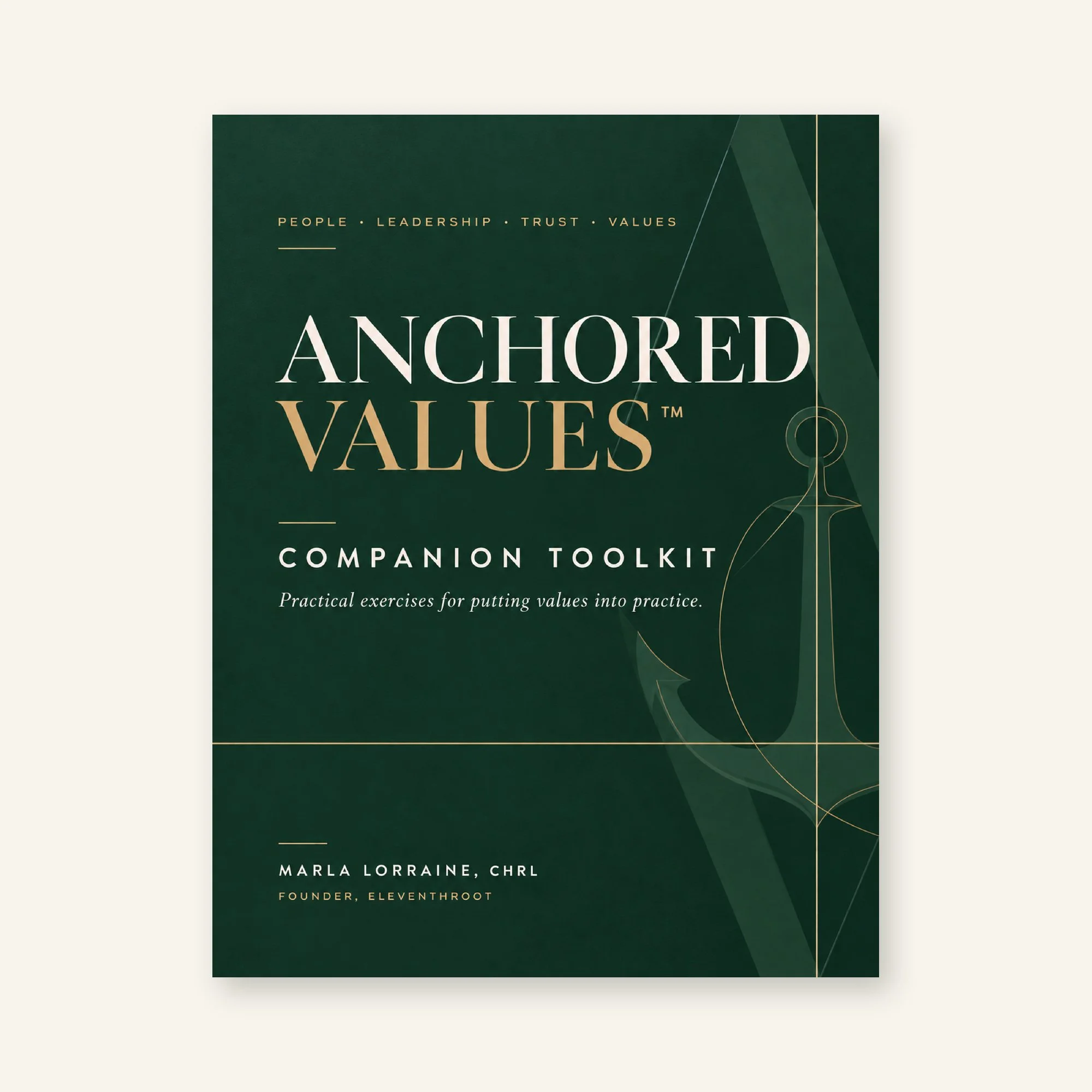
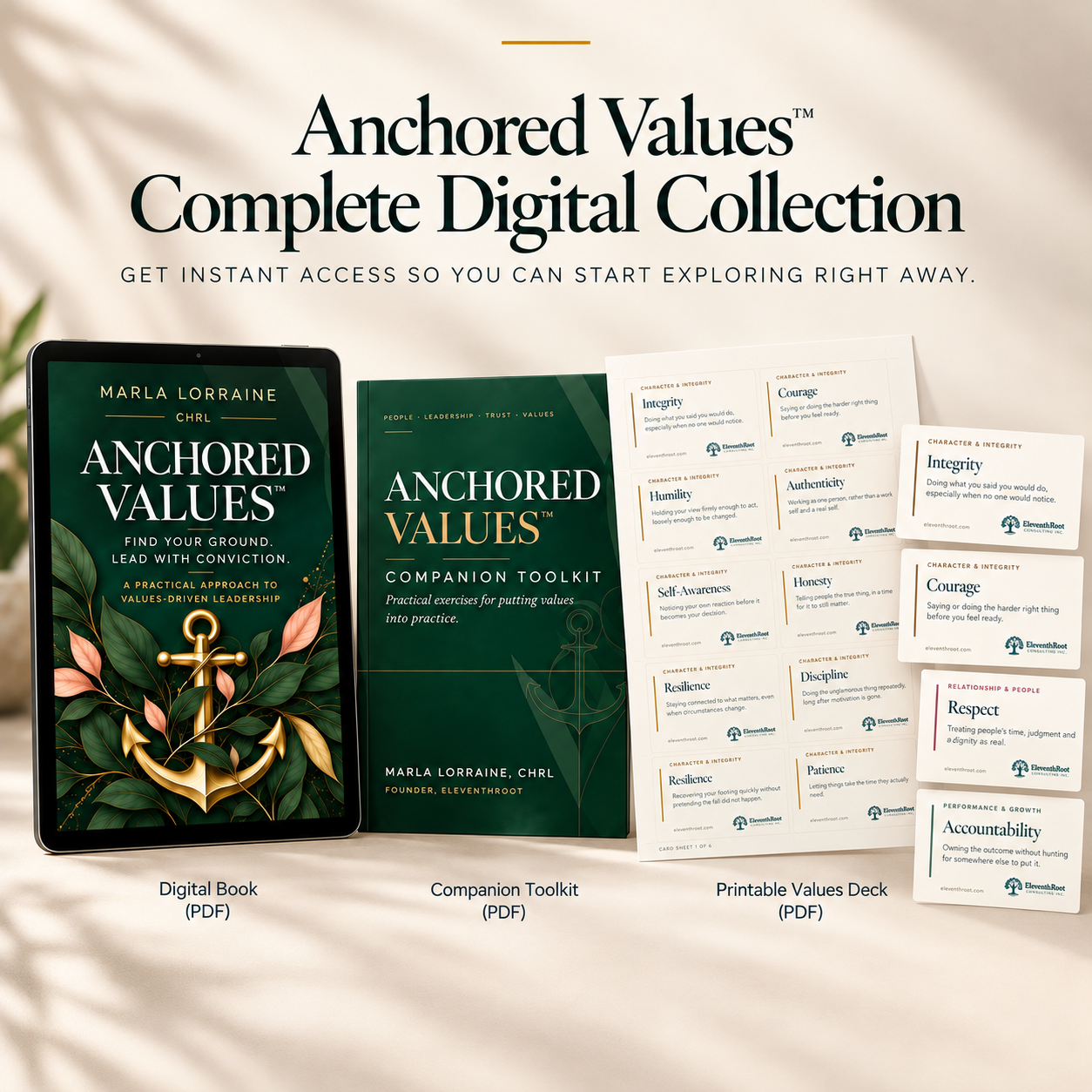
The book teaches the methodology. The Companion Toolkit and Values Deck give you structured, practical ways to apply it.

The Book
The thinking
The methodology, the original four-question framework and illustrative leadership examples, across ten chapters.

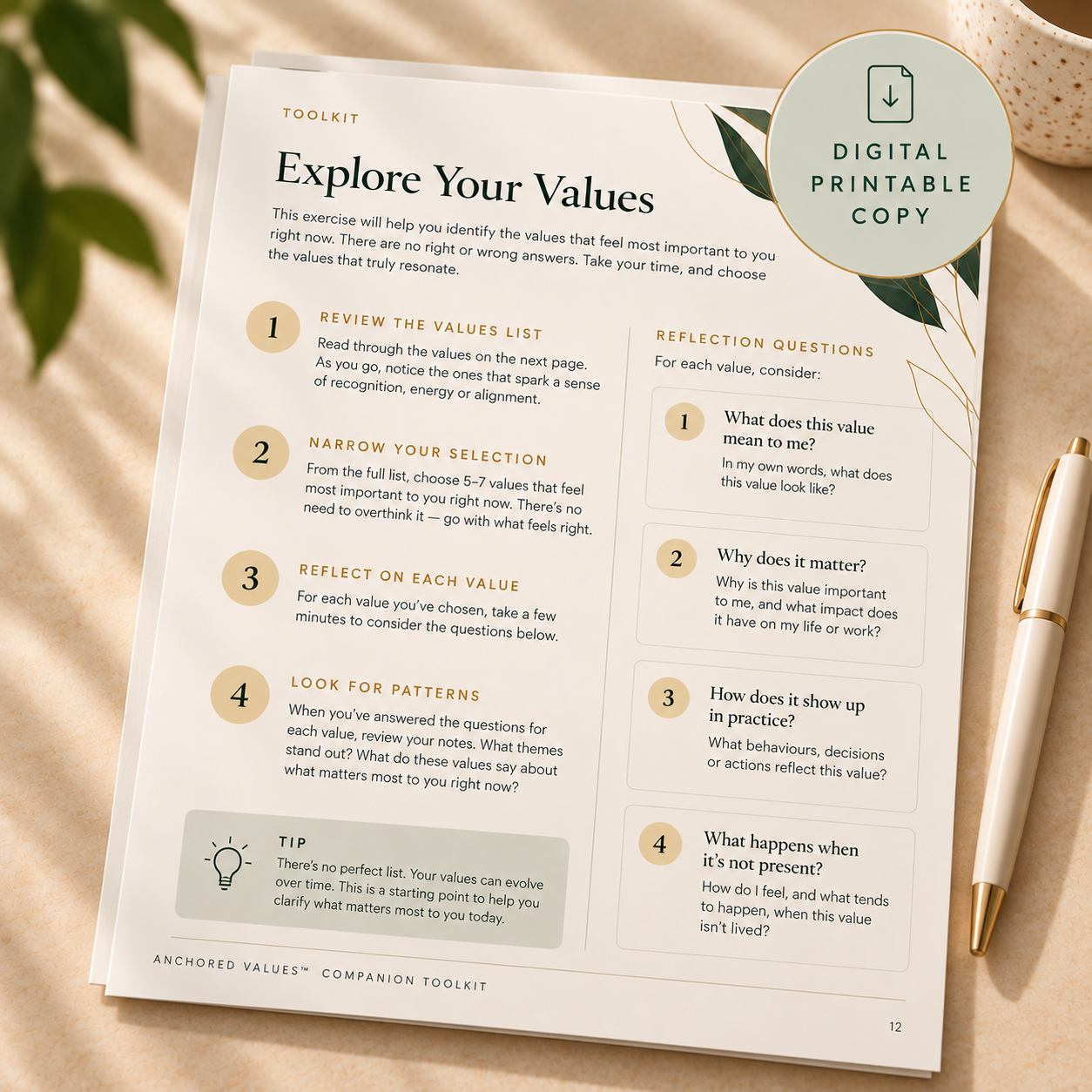
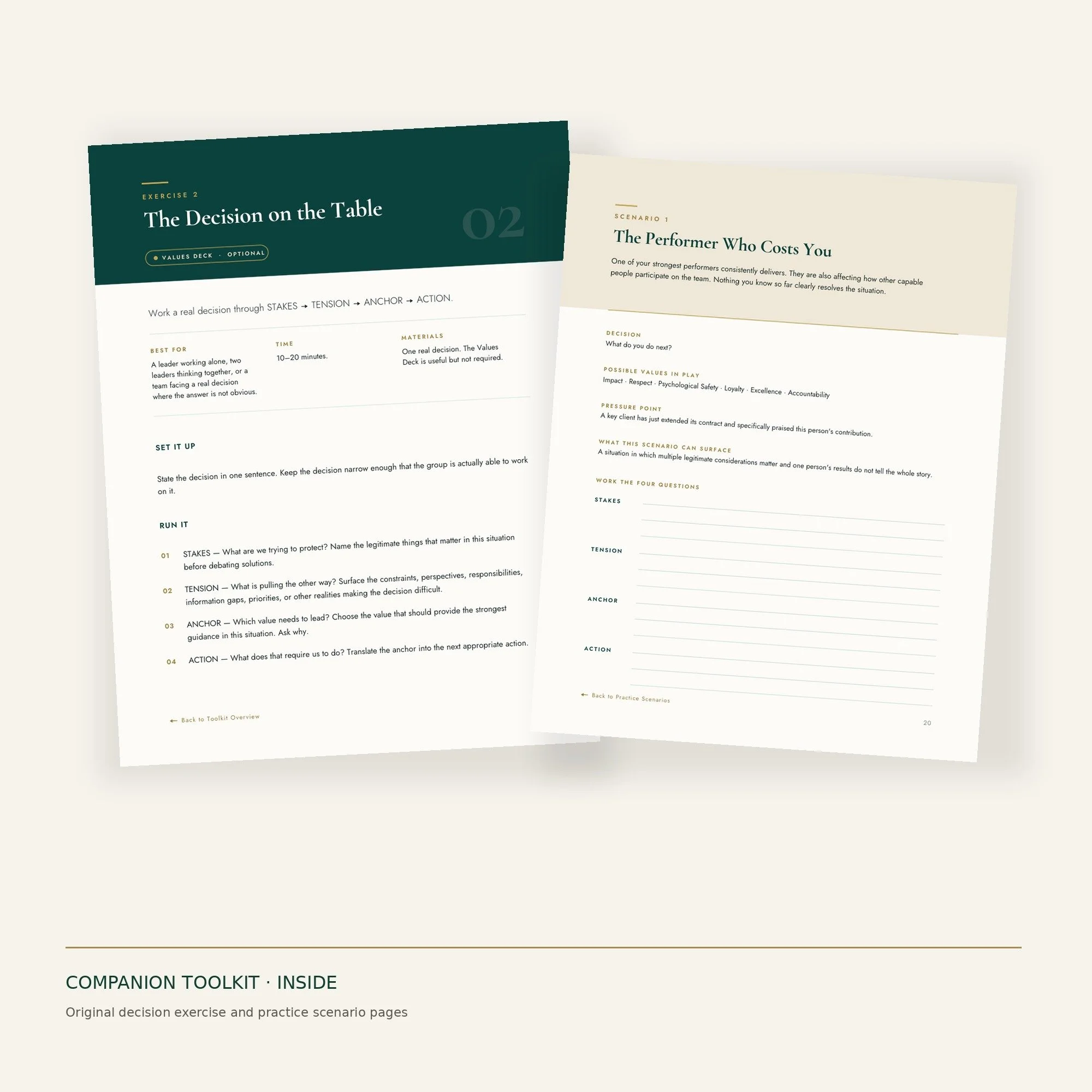
The Companion Toolkit
The practice
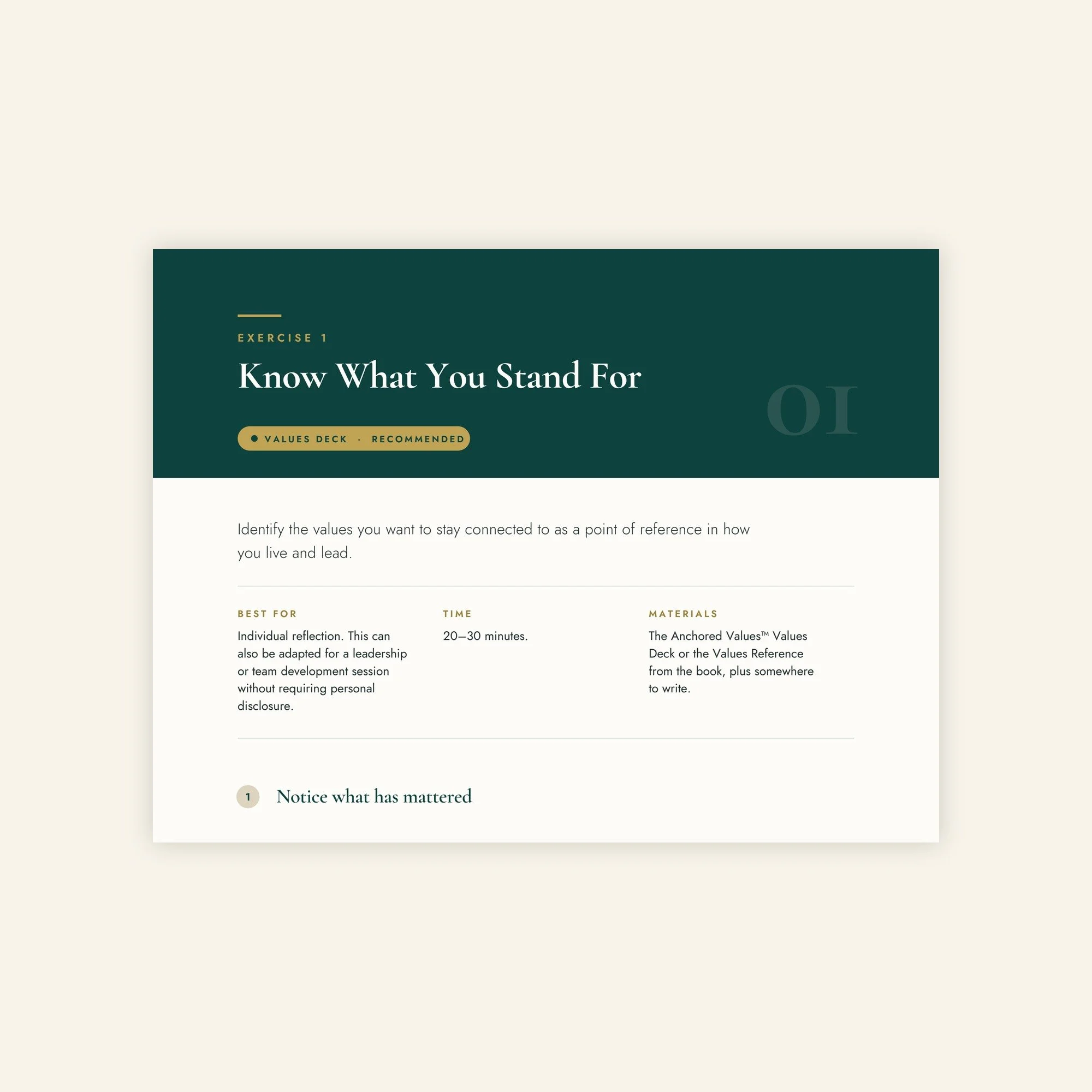
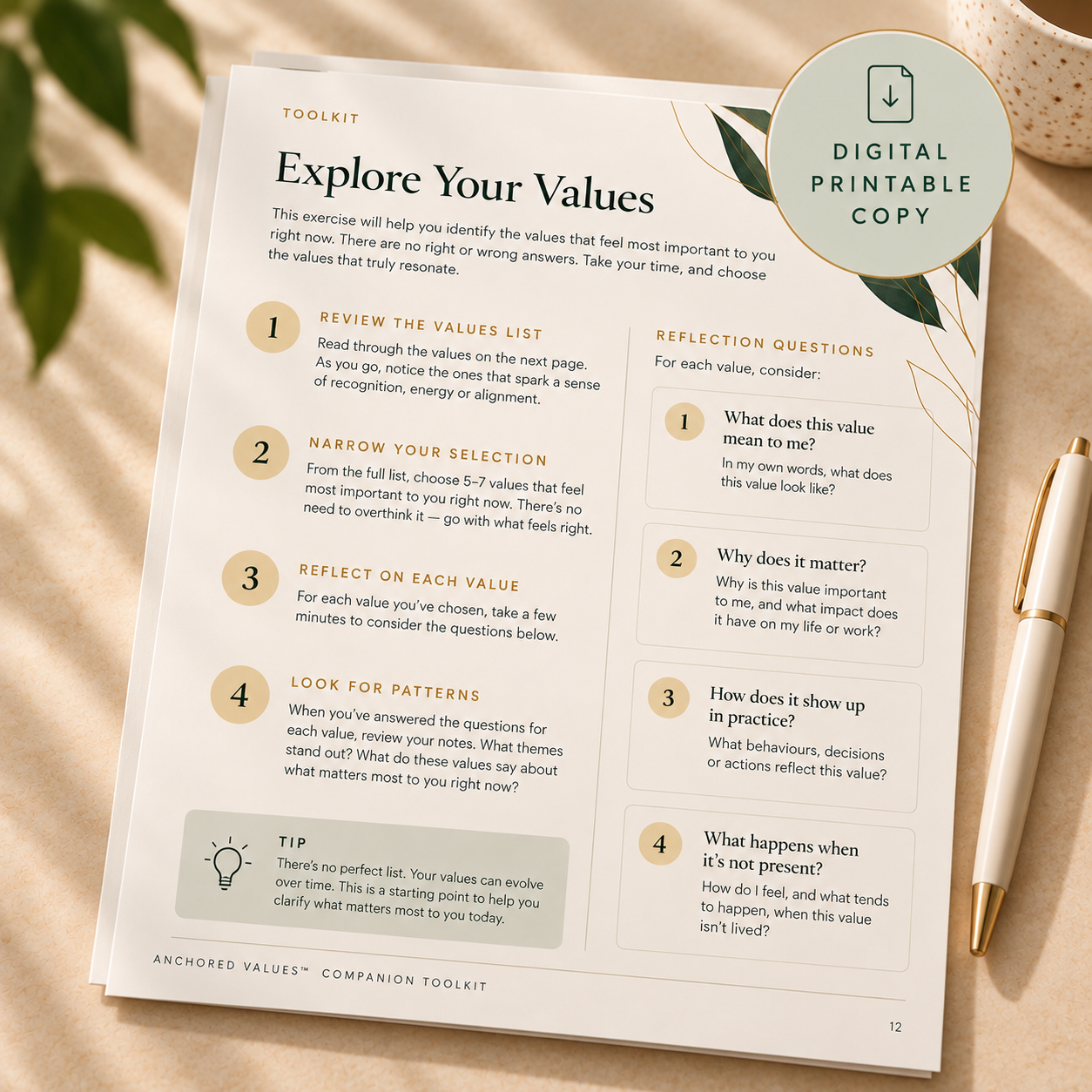
- Four exercises: Know What You Stand For, The Decision on the Table, Stated vs. Lived, and Team Operating Principles
- Four practice scenarios
- Facilitation notes for working with a group

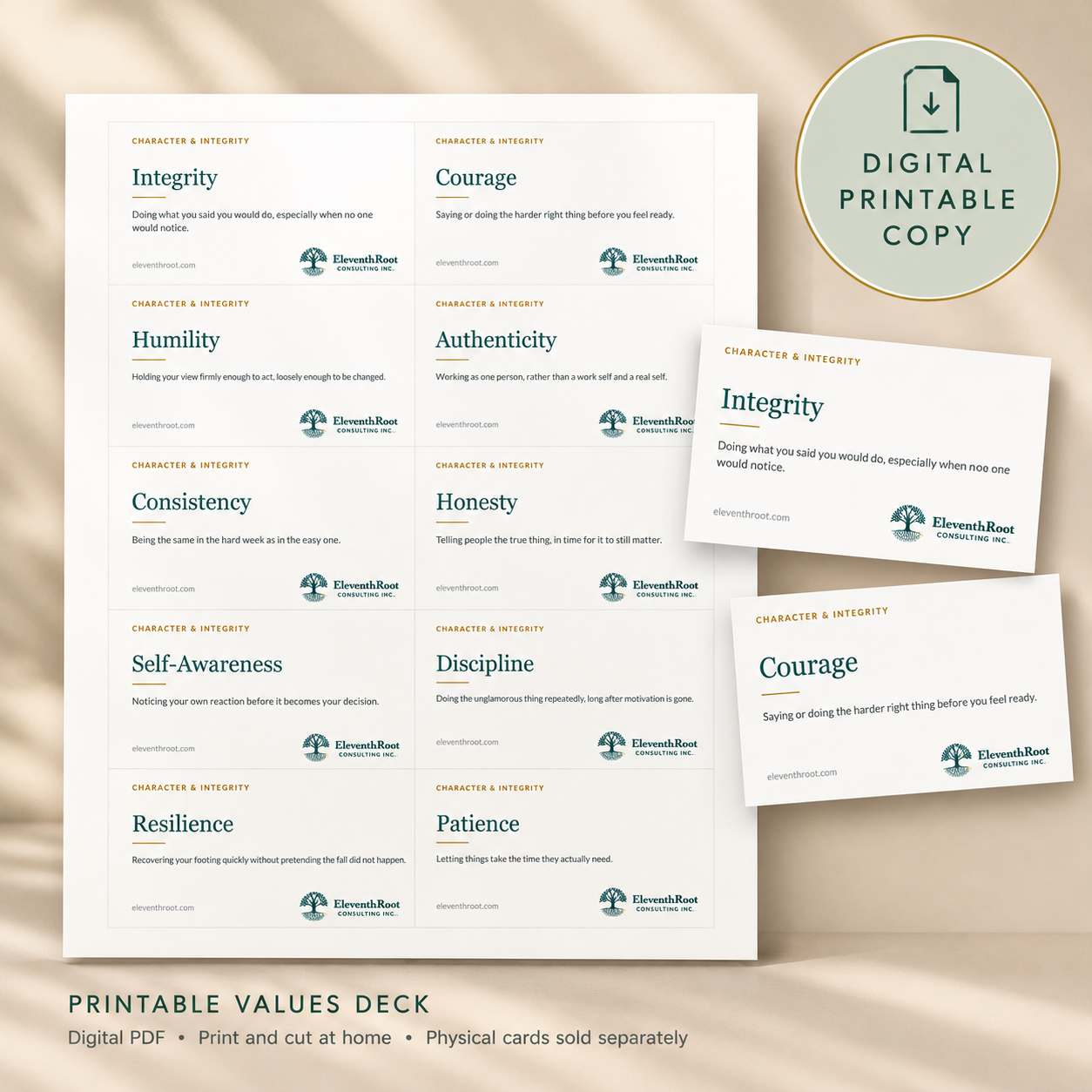
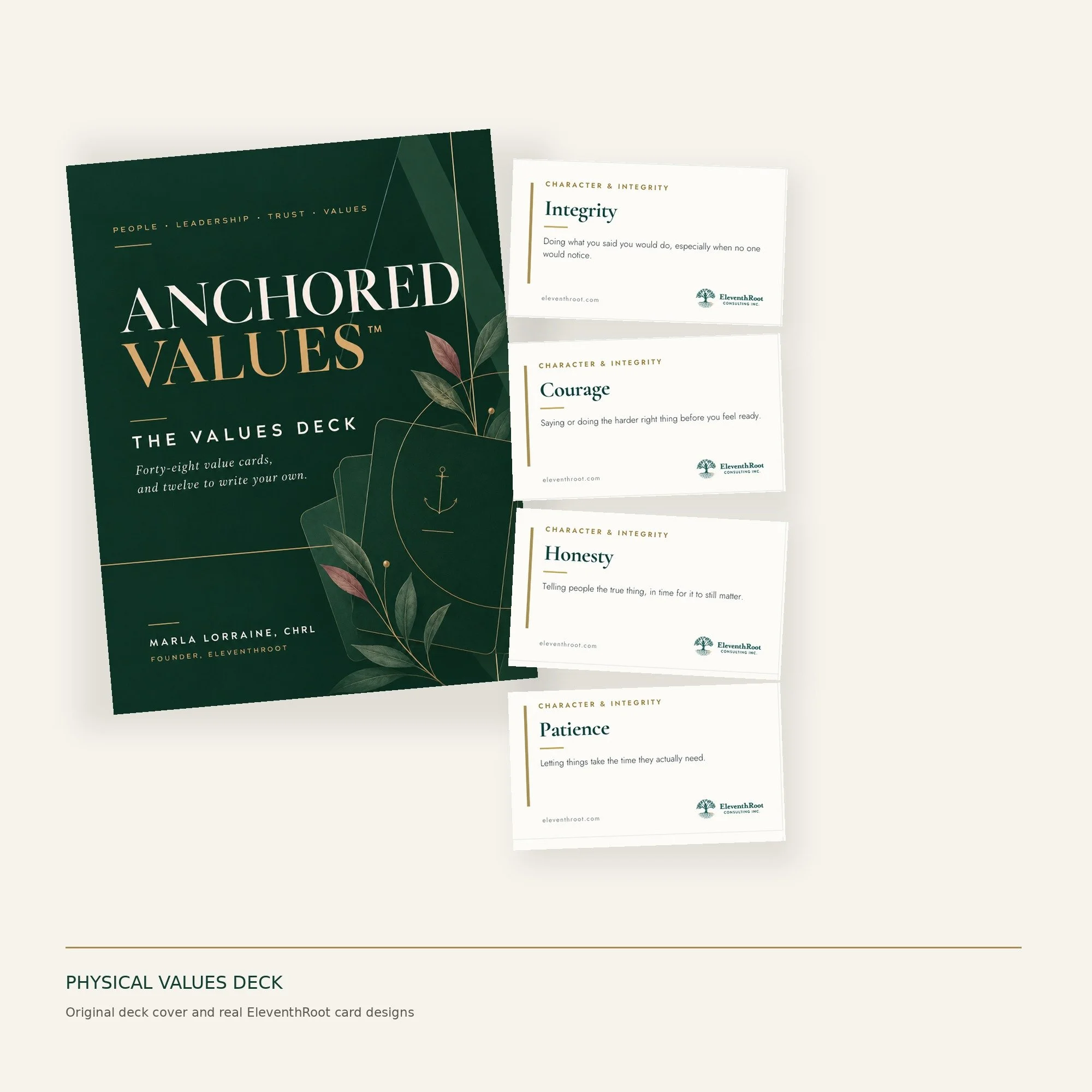
The Values Deck
The conversation
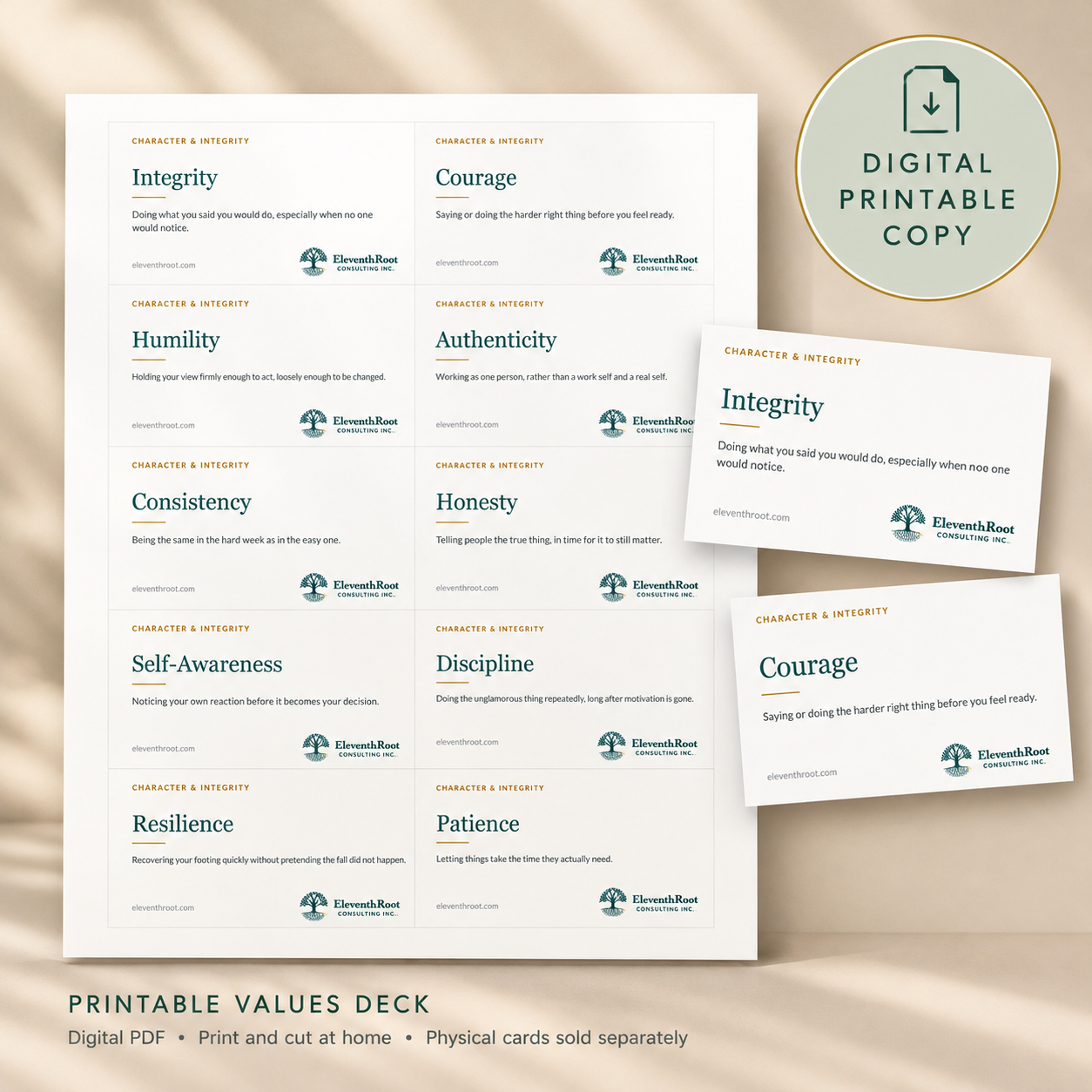
Forty-eight defined values, plus twelve blank cards for the values a list doesn’t include. A tangible way to identify, compare and discuss values in individual and group work.
For Organizations
Bring Anchored Values™ In-House
Marla Lorraine, CHRL, offers Anchored Values™ in-house for leadership teams and organizations that want to apply the methodology to their own decisions, teams and culture.
Packages are currently in development. Those who have purchased Anchored Values™ materials will receive preferred pricing.
Book a Call